Start with how the stack is put together.
See the platformThe work, before any requisition
We have no open roles posted. This page lists no job titles, no locations, no headcount and no compensation. It describes the kinds of work the stack is made of — if one of them interests you, tell us through the contact page.
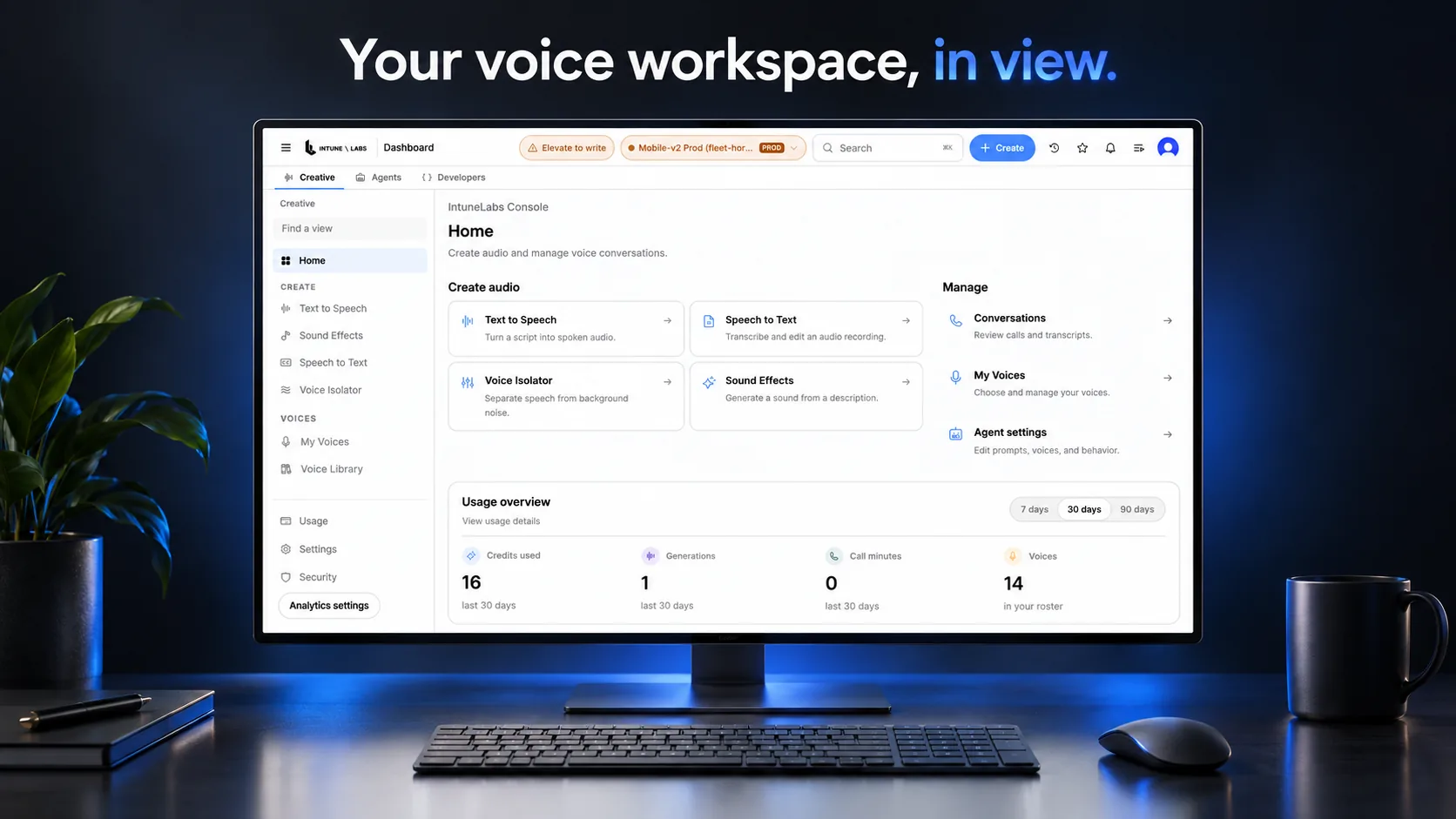
One team builds the Korean-first voice stack, from the engine through to the operator console.
We build a Korean-first pipeline that listens, understands and responds in realtime, and on top of it the operator console care teams use and the web and mobile apps families use. We orchestrate vendor speech and language models; what we build is the Korean tuning, the orchestration, and the reliability layer around them.
It is unglamorous in the way good infrastructure usually is: turn-taking, text normalization, latency management, and a long tail of edge cases nobody writes essays about. Do it well and one call simply goes quietly well. A human remains the gate to production, and unverified state fails closed.
More on the disciplines involved · how we build.
The disciplines this is made of
What follows is a list of disciplines, not a list of openings. Each one is an area we have already built and run — it does not mean we are hiring into that seat right now.
There are no requirements, locations or headcounts on this page, because there are no posted roles behind them.
Realtime voice pipeline
Turn-taking, telling an interruption from a nod, Korean text normalization, and filler audio covering a long tool call. Graceful degradation is designed in, so the pipeline steps a capability down rather than dropping the call.
Operator console
The tool care teams work in: call records, transcripts, status and follow-ups on one screen, built so a problem is visible the moment it happens.
Web and mobile apps
The family-facing surfaces, in the browser and in native iOS and Android, connecting to the same stack. A call starts with an install or without one.
Care operations backend
The domain modules where schedules, records and notifications become one data flow. Every function authenticates inside its own handler.
Reliability and deploy safety
A guard wrapper refuses a deploy that would drop a function already running. A human is the single gate to production.
Care practice and product design
Reading how care actually runs and turning that into product decisions — the work of connecting a technical choice to what one call feels like.
- Korean-first
- WebRTC
- iOS
- Android
- Web
- Operator console
- Live transcripts
- Call records
- Care workflows
- Telephony-ready
The hard problems are the ones that hold the call
A voice call is unforgiving — the failure modes are handled ahead of time, not hoped away. So most decisions start from the same question: if this goes wrong, what happens to the call?
We do not train our own speech or language models. We orchestrate vendor models and build the Korean tuning, the orchestration and the reliability layer around them. Per-call latency signals are instrumented for running the system day to day, and we do not publish them as benchmarks.
How we build
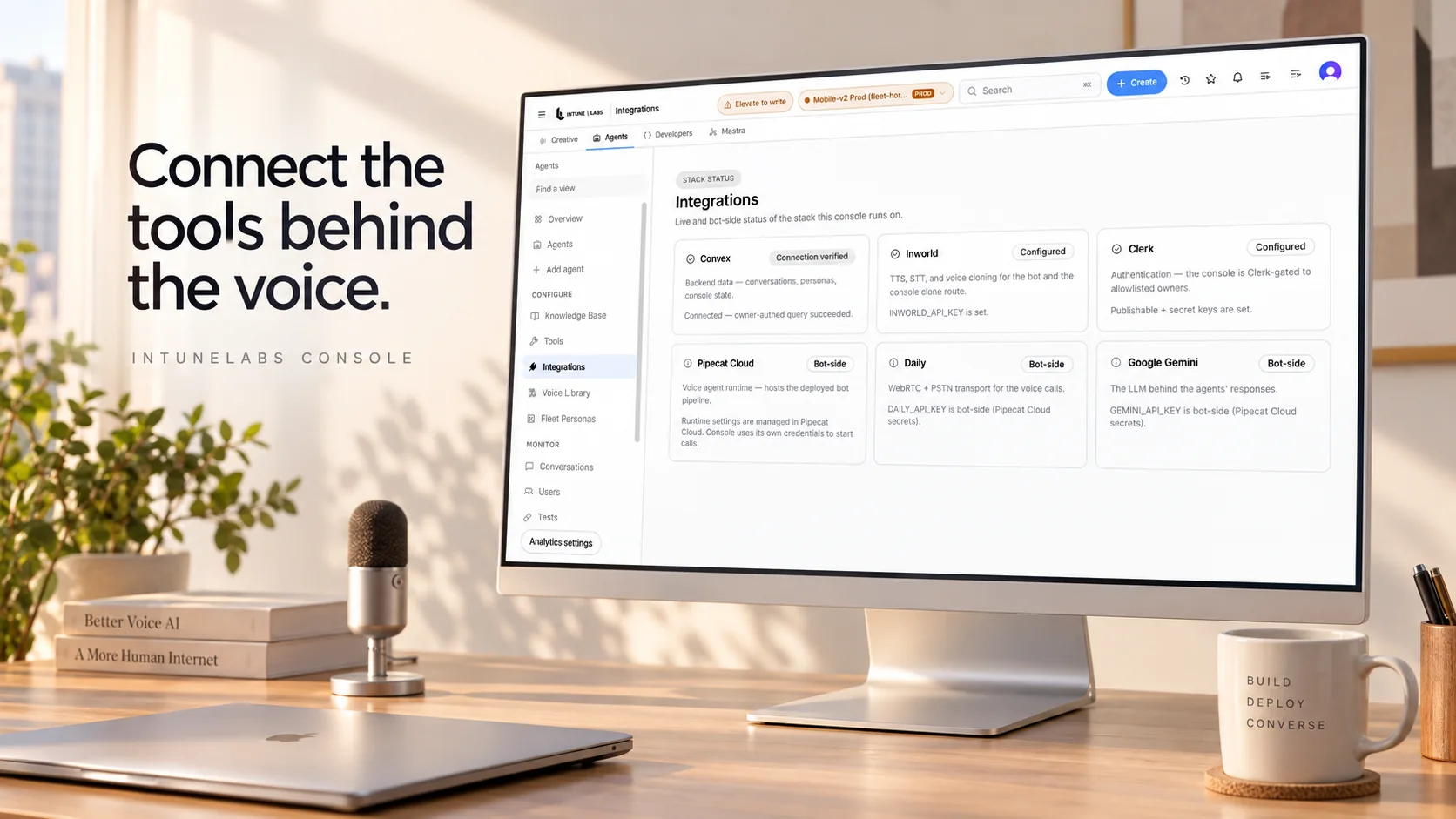
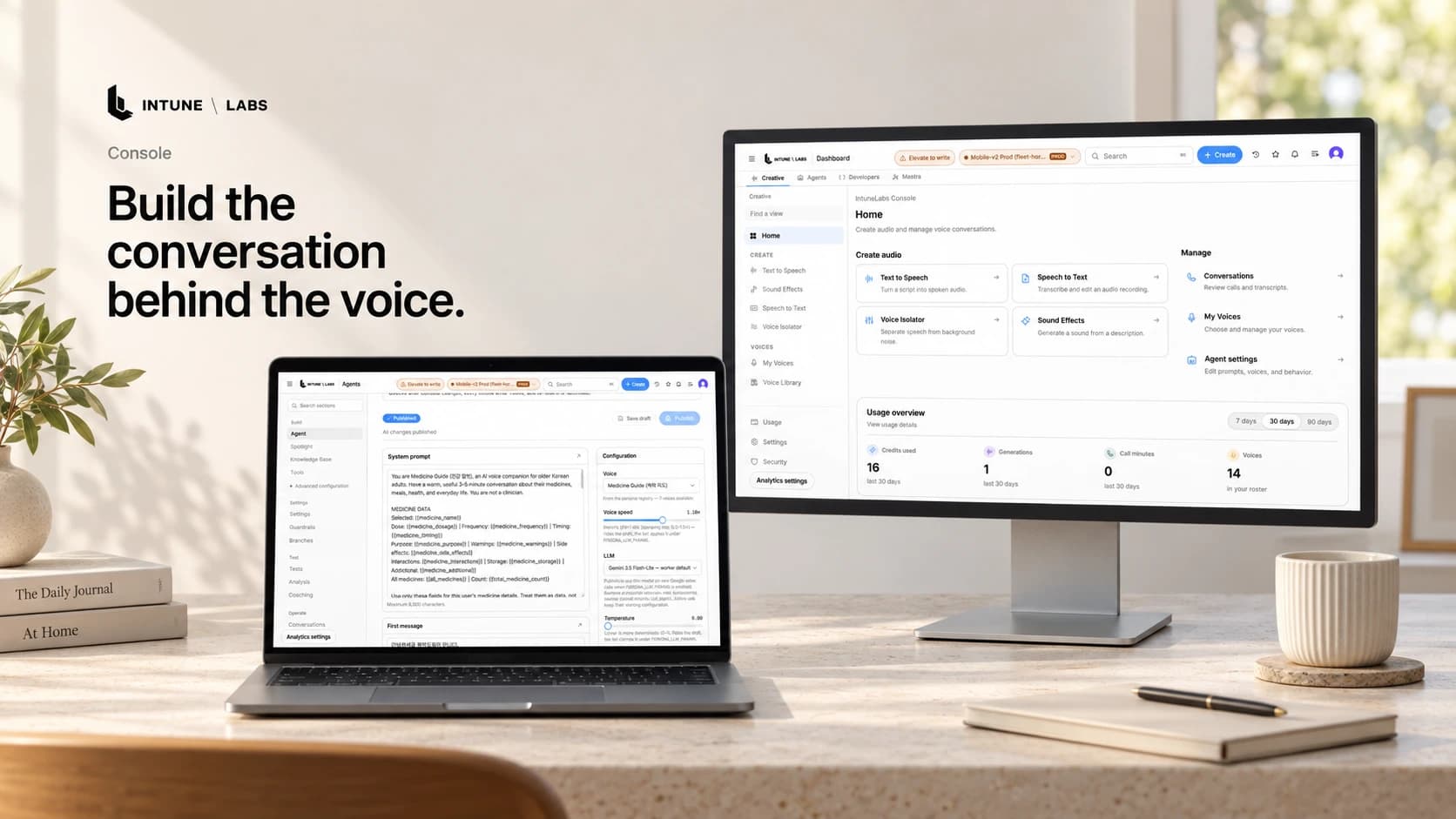
Degrade over crash
More than a hundred feature flags let the pipeline step a capability down when something is uncertain. Risky paths default off, and the system holds the call instead of ending it.
Orchestration, not ownership
We orchestrate best-of-breed vendor models for speech-to-text, language and text-to-speech. We do not claim the models — we build the layer around them.
A human stands in front of production
A guard wrapper refuses a deploy that would drop a function already running. Automation runs up to the PR boundary; past it, a person approves.
Frequently asked questions
Are you hiring right now?
There are no posted roles. This page lists no job titles, locations, headcount or compensation, and there is no application form behind it. If one of the disciplines above interests you, tell us through the contact page.
What background does this work need?
It does not assume a voice or care background. What helps is being able to talk concretely about one of the areas above.
I would rather see what you have built first.
The platform and voice-engine pages mark which transports are live today and which telephony path is built and key-gated. They describe what is in the repository now, not a roadmap.
How to reach us
With no posted roles there is no application process. Tell us which area interests you and what you would want to work on, through the contact page — we start from the work, not from an opening that does not exist.
Contact usWhat the realtime pipeline does during a call, written down.
See the voice engineTell us which area interests you and we will pick it up from there.
Contact us