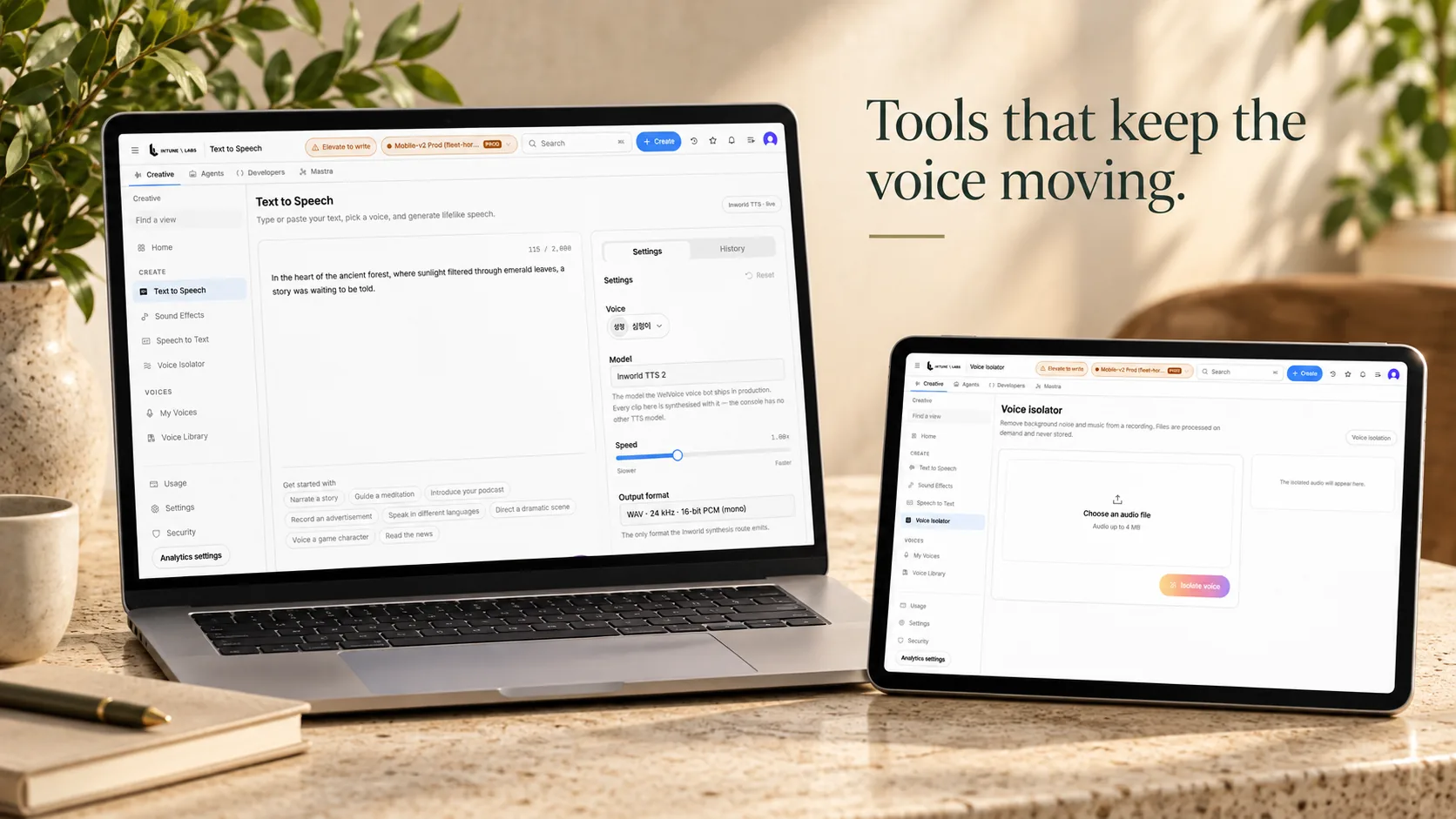
Prepare spoken greetings and prompts
Use the text-to-speech workspace to prepare audio for greetings and guidance. It is for call prompts — not a general media studio.
IntuneLabs Console
Console is the operator workspace: set an agent’s role, voice, and greeting, then handle live calls and records in the same place. Built in-house on our stack.
Request a demo
COMPOSE THE AGENT
Describe the help it should offer, write the opening greeting, and assign a voice. Compose the agent in the console — no separate tooling — and watch it take a call from the same workspace.

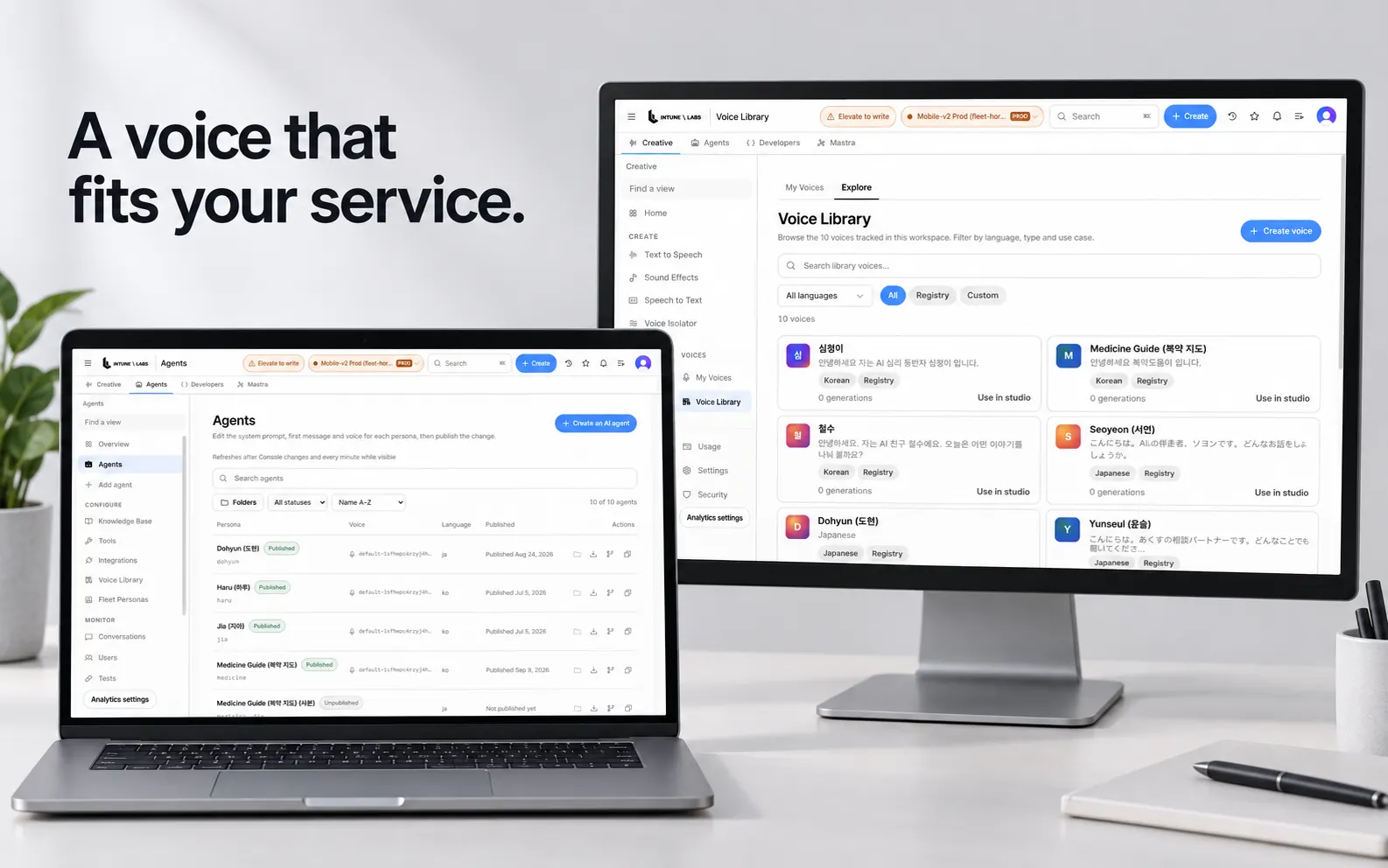
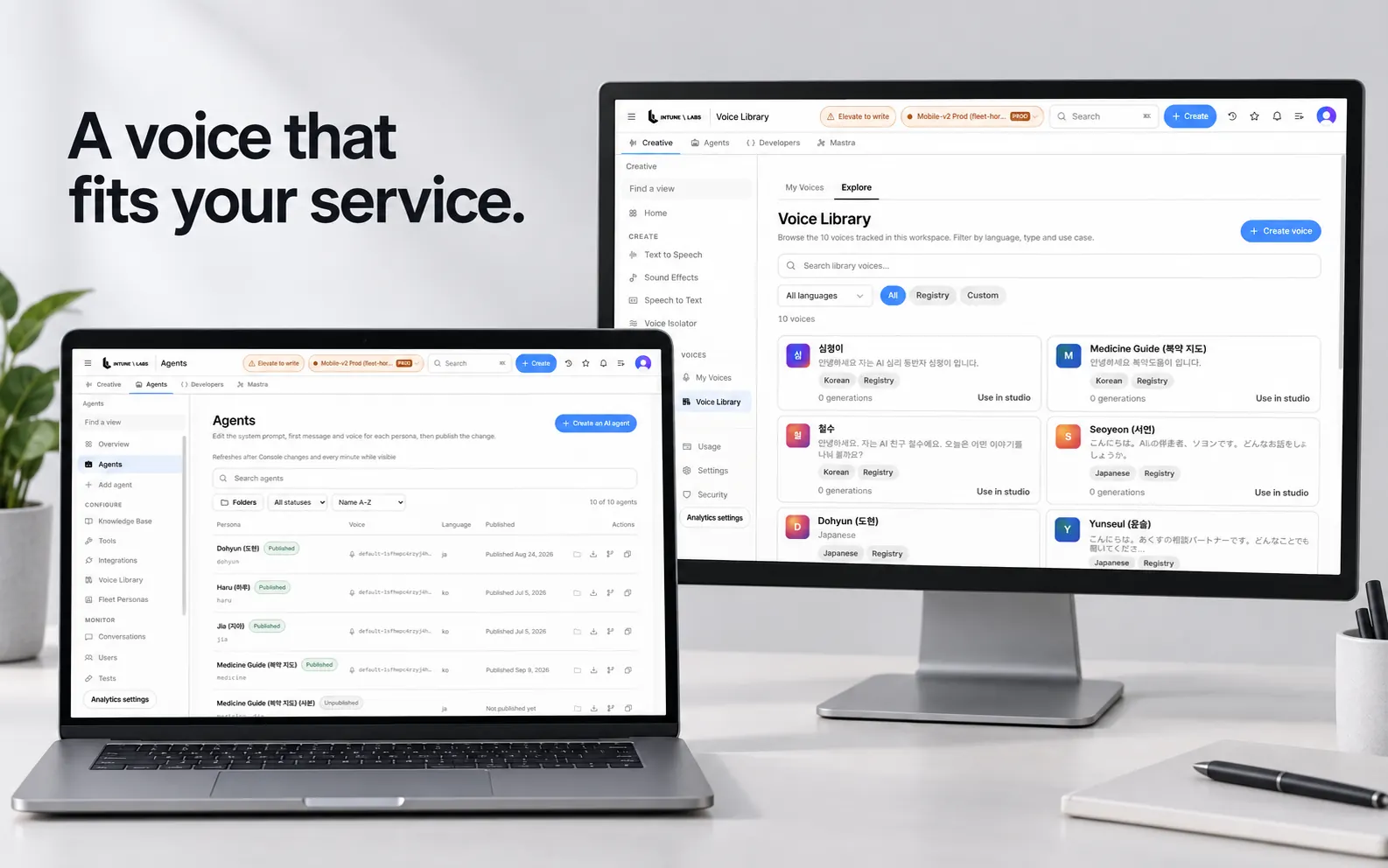
VOICE LIBRARY
Browse and compare voices you can attach to an agent. This is a library for assignment — not a cloning studio, and not a claim that we train the models ourselves.
CALLS AND RECORDS
The transport connects, the transcript accumulates while the call is running, and records and follow-up land in the console. Panels here are examples, not real call data. Follow-up runs only after a person confirms it.
TOOLS FOR OPERATIONS
Use the text-to-speech workspace to prepare audio for greetings and guidance. It is for call prompts — not a general media studio.
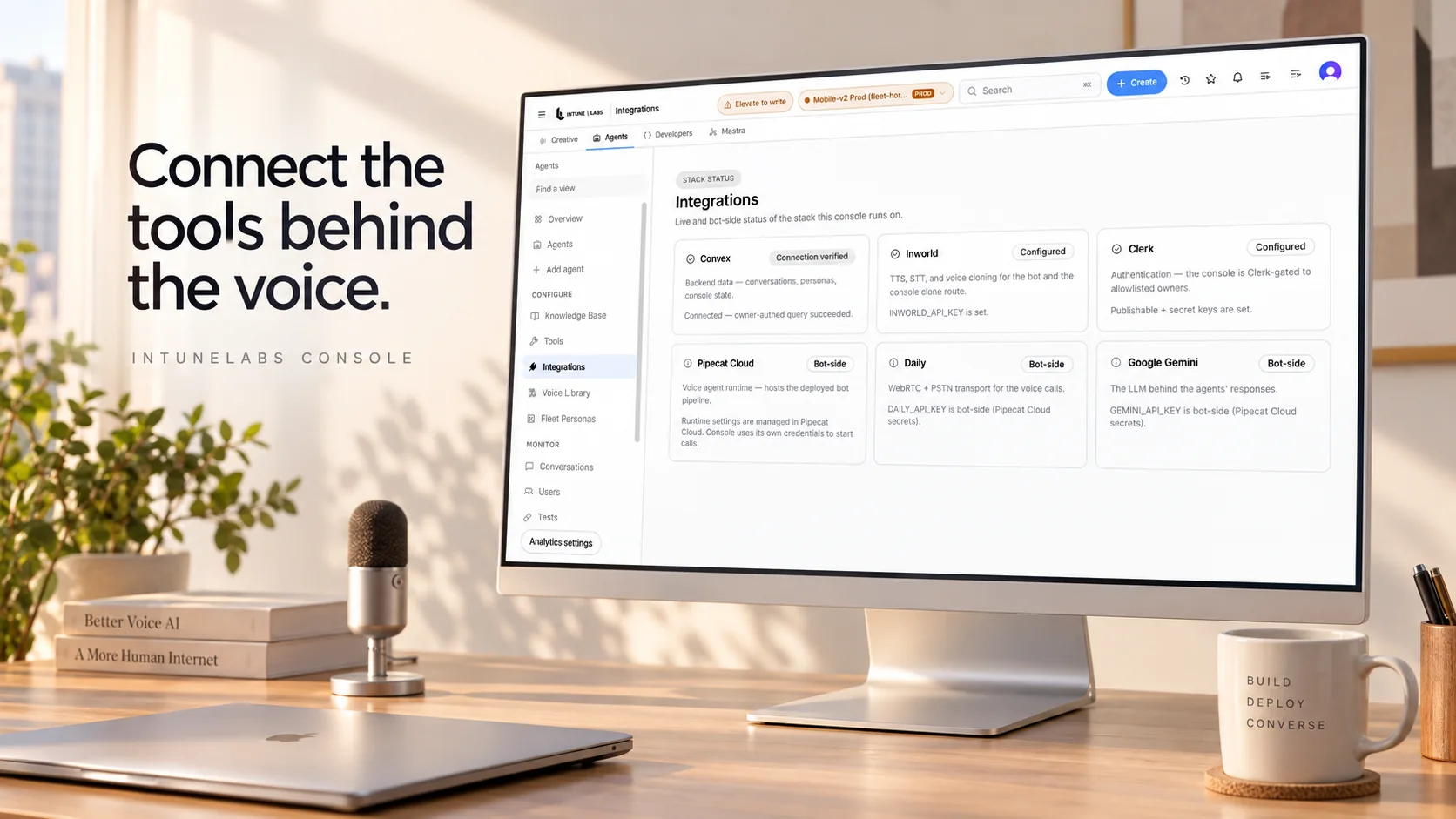
Review available connections in the integrations workspace, then set scope against your environment in a demo. Nothing here turns every integration on out of the box.
Review the agent’s role, voice, and operating environment in the product. Changes that reach production pass a human gate. IntuneLabs holds no security or privacy certification, and this page claims none.