The setting
In an organization running check-in calls on a rhythm, the call itself is rarely the hard part — what survives it is. With no way to read back what was said, the call ends where it happened.
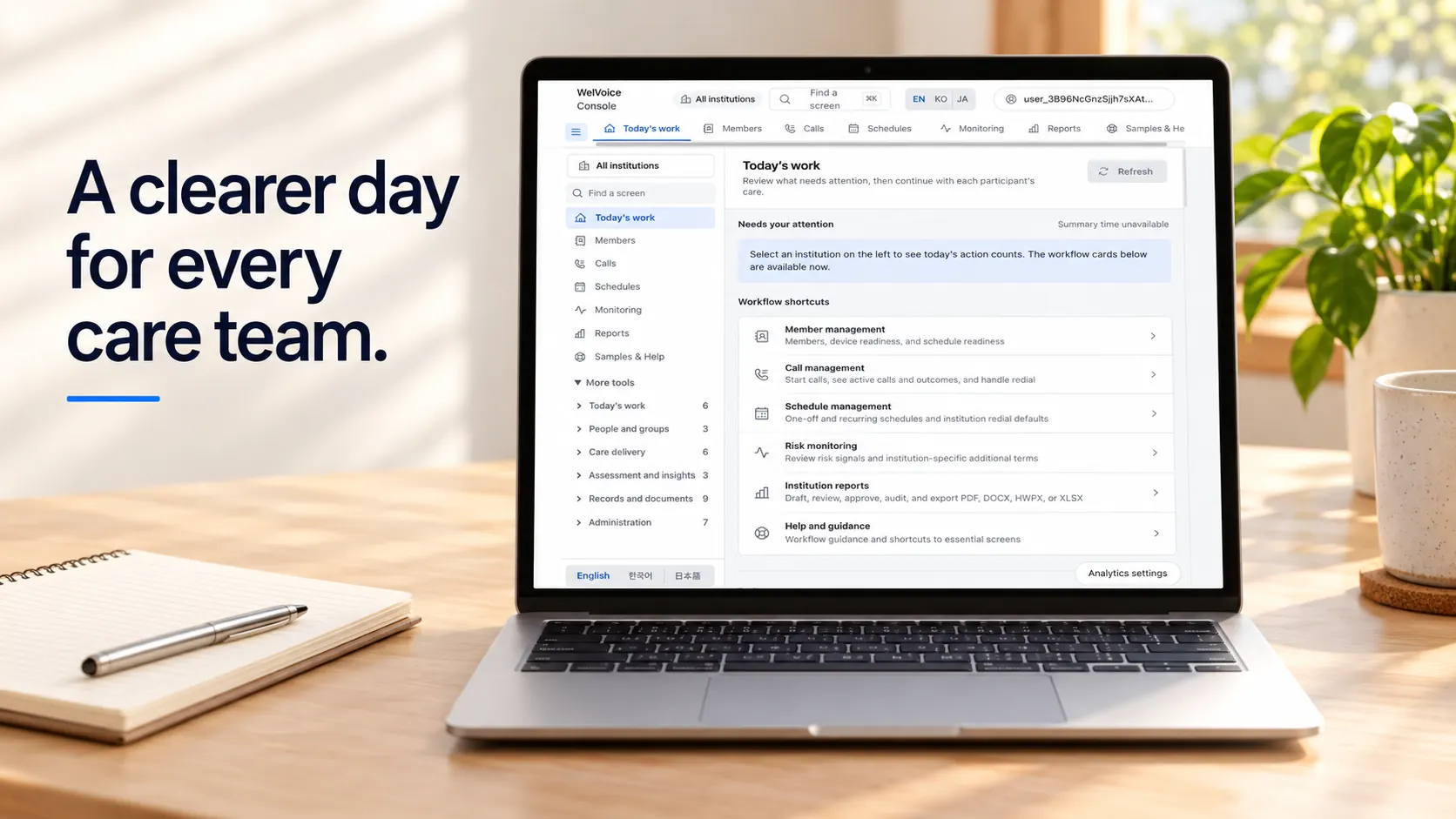
This scenario puts the call inside the operations around it: the call runs, a record survives it, and whatever needs doing next reaches a person.
What gets assembled
The voice engine holds the Korean conversation — turn-taking that waits through a backchannel, handling that tells an interruption from a nod, and graceful degradation that steps a capability down rather than dropping the call when something is uncertain.
Transcription accumulates while the call runs, with PII redaction and output guardrails running as processors in the same pipeline. The detail is on safety and reliability.
When the call ends, the record and its follow-up land in the operator console. Production actions run only after a person confirms them.
Where it stands
Running today
Browser and mobile call paths, live transcription, call records, and reviewing them in the operator console all run today.
Still in development
The care backend's schedule and record integration is UI-complete with backend integration in progress. We are not saying it is deployable today.
Scoped during the deployment
Recording retention, storage location, and access are scoped with you rather than assumed. If a telephony path is needed, its scope is agreed in the same conversation.
Transcription accumulates while the call is still running, and when it ends the record and its follow-up land in the console. Production actions run only after a person confirms them.
This page is not a customer story. No organization is named or implied, and nothing here carries a customer quote or an outcome figure.
Live
transcription accumulates during the call
One screen
call records and follow-up
Scope this deployment with us
Contact sales