A Small Pause: A Practical Guide to Meditation with Voice AI
A grounded guide to short, optional meditation with voice guidance: what the evidence means, how to begin safely, and where voice AI should stop.
What should you do when someone says, “Try meditation,” but sitting quietly feels vague, awkward, or like one more task to get right?
Start smaller than the word meditation suggests.
A useful first practice can be one to three minutes. You can sit, stand, or remain where you already are. You do not need to empty your mind, breathe in a special pattern, or reach a calm state. You only need a simple point of attention and permission to stop.
A spoken guide can make those few minutes easier to follow. It can set a gentle pace, reduce the need to read a screen, and tell you when the practice is over. But the voice is a guide, not an authority. It should fit your preferences, remain easy to interrupt, and never make promises that a short audio practice cannot support.
Meditation is attention practice, not a performance
In ordinary language, meditation can refer to many different practices. For this guide, it means deliberately noticing something for a short period: the natural movement of breathing, sounds in the room, contact between your feet and the floor, or the fact that thoughts are coming and going.
The aim is not to stop thinking. Minds produce thoughts. Noticing that your attention has wandered and choosing where to place it next is part of the practice, not evidence that you have failed.
Meditation is also not a test of how still, peaceful, or disciplined you can be. You may finish a minute feeling much the same as when you started. That does not make the minute pointless. The practical act was the pause itself: you chose to notice what was happening without demanding a particular result.
Research gives us reasons to take mindfulness seriously, but not to turn it into a universal prescription. The US National Center for Complementary and Integrative Health says mindfulness may help some people with well-being, stress, or sleep, while the evidence is mixed and the practice should not replace care. It also notes that meditation is usually considered low-risk, not risk-free. That is why any practice offered here is optional and easy to pause or stop. NCCIH: Meditation and Mindfulness NCCIH: Meditation Safety
That distinction matters. “Some research suggests a possible benefit” is not the same as “this short practice will make you feel better.” If meditation feels unpleasant, disorienting, frustrating, or simply unhelpful, you do not owe the practice more time.
What the evidence can—and cannot—show
Meditation research often studies structured programs. Those programs may involve trained instructors, repeated sessions, group support, home practice, or several weeks of participation. A short voice prompt is not automatically equivalent to any of them.
For example, a small trial involving older adults studied a six-week, instructor-led mindful-awareness program. Whatever that trial found belongs to that specific intervention; it should not be transferred to a one-minute recording or a voice AI session. Mindful-awareness sleep trial
A meta-analysis of structured mindfulness programs for caregivers reported some benefits across trials. That evidence can inform why people continue to study mindfulness. It does not establish an effect from Simcheong, and it does not tell us what any individual reader will experience during a brief guided pause. Caregiver mindfulness meta-analysis
There is a separate, narrower question: can voice be a workable way to deliver a routine? A small study found that older adults could engage with simple voice routines, including meditation. That supports feasibility—people can use a voice interaction for this kind of activity—but it does not prove a health outcome. Older-adult voice-routine study
These are three different evidence layers:
- Research on mindfulness practices may tell us about the interventions that were actually studied.
- Voice-routine research may tell us whether a spoken interaction is workable for some participants.
- Product evidence may tell us what has been implemented in code.
None of those layers can quietly stand in for another. Code does not prove an outcome. Feasibility does not prove effectiveness. A multiweek program does not validate a short voice clip.
Where a voice can be useful
Silence works well for some people. Others find it easier to begin when a voice provides a little structure.
A spoken guide can remove small pieces of effort. You do not need to watch a timer. You do not need to remember what comes next. If reading a small screen is inconvenient, listening may be a more comfortable access route. A prompt such as “notice your feet” can also be more concrete than the broad instruction “be mindful.”
Pacing matters here. A useful guide leaves enough room to notice something before giving the next instruction. It does not fill every second with explanation. It does not treat silence as an error.
The best voice is not necessarily the most realistic or emotionally expressive one. It is the one you can understand without strain and ignore without guilt. Some people prefer a steady voice with little variation. Others want a little more warmth. Either preference is reasonable.
Before beginning, listen to one or two sentences if you can. Ask:
- Is the speech clear at this volume?
- Does the pace give me time to respond?
- Is the tone neutral enough that it does not demand a mood from me?
- Can I stop it quickly?
If the voice is distracting, lower the volume, choose another voice where that option exists, shorten the practice, or turn the guide off. Adjustment is not a lesser form of participation. It is how the practice remains yours.
A one-to-three-minute optional practice
You can read the following once and practice in silence, or have a person or device read it slowly. Keep your eyes open or closed, whichever feels more comfortable. Do not use this practice while driving or doing anything that needs your full attention.
1. Choose a stable position.
Sit, stand, or stay as you are. Let your body be supported in whatever way is available. There is no required posture.
2. Decide how long you want to pause.
Choose one, two, or three minutes. Shorter is fine. You may stop before the time ends.
3. Notice one point of contact.
Feel your feet against the floor, your hands resting, or your body against a chair. You do not need to describe the sensation. Just notice that contact is present.
4. Let breathing remain natural.
Notice one comfortable breath if that feels okay. Do not deepen it, count it, hold it, or force its pace. Let breathing happen in its ordinary way.
If focusing on breathing does not feel comfortable, return to your feet, hands, a sound in the room, or another neutral point of attention.
5. Allow attention to move.
You may notice a thought, a sound, an itch, impatience, or nothing in particular. When you realize your attention has moved, choose whether to return to your point of contact or simply notice the next sound.
6. End plainly.
When the time is up, look around the room if your eyes were closed. Notice where you are. Continue with the next part of your day without grading the practice.
Breathing should stay natural and comfortable throughout. If you feel discomfort, dizziness, or lightheadedness, stop the exercise and return to normal breathing. NHS provider breathing guidance
You can also stop for any other reason. You do not need a symptom or an explanation. A guide that makes stopping difficult is poorly designed for this purpose.
When technology helps—and when it gets in the way
Meditation does not require technology. A timer, a written note, a teacher, a family member, or silence may be a better fit. Adding AI can introduce distraction, unwanted complexity, or a voice that feels intrusive.
Voice AI has a modest role here: offering a reusable spoken structure when a person wants one. A short practice may be easier to access without reading or remembering a sequence. Where a system offers choices in language, pacing, or voice, those choices can make the guide easier to adjust.
Those are interaction possibilities, not wellbeing outcomes. If the technology becomes the main thing you are managing, it has stopped helping with the pause.
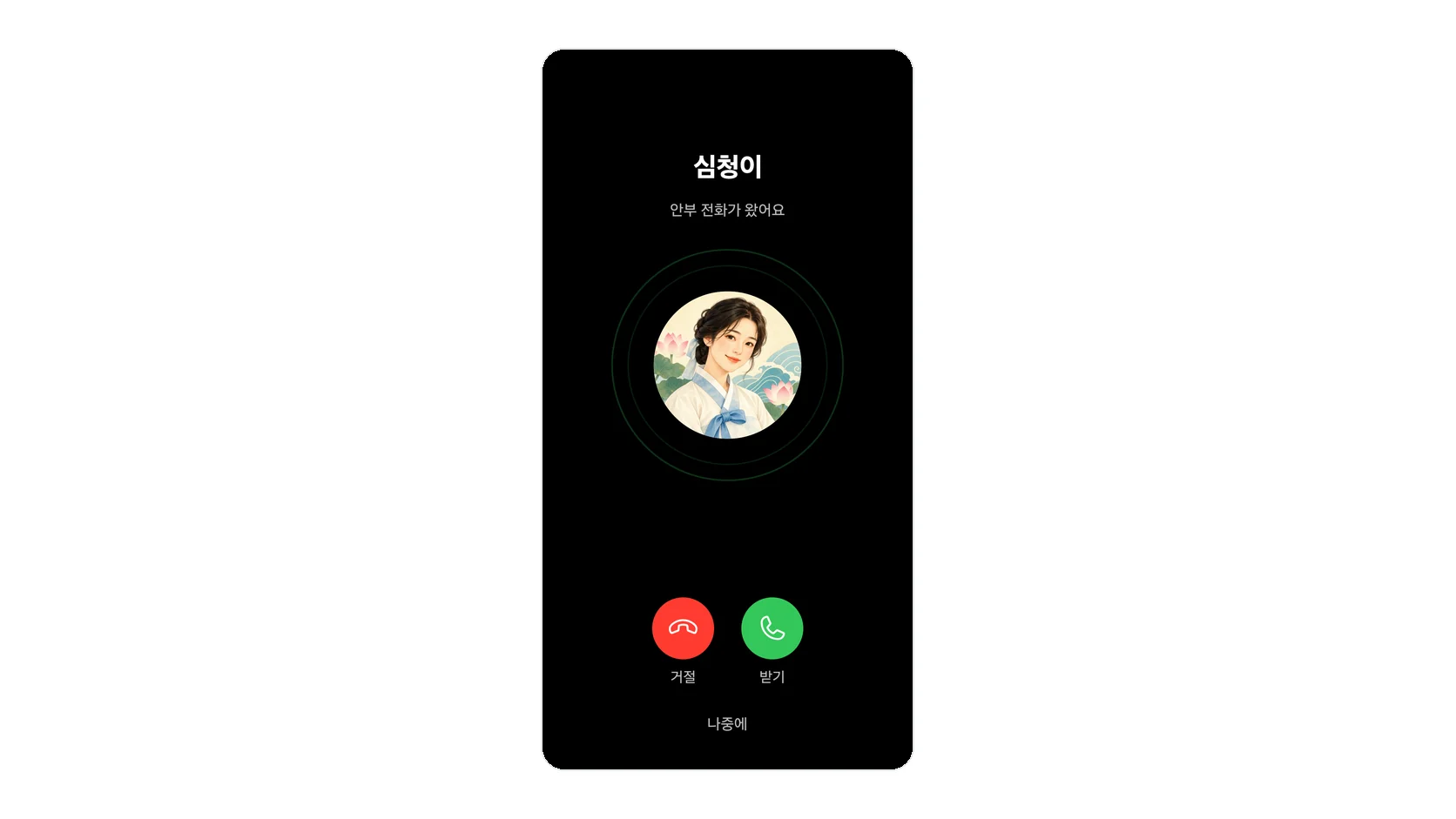
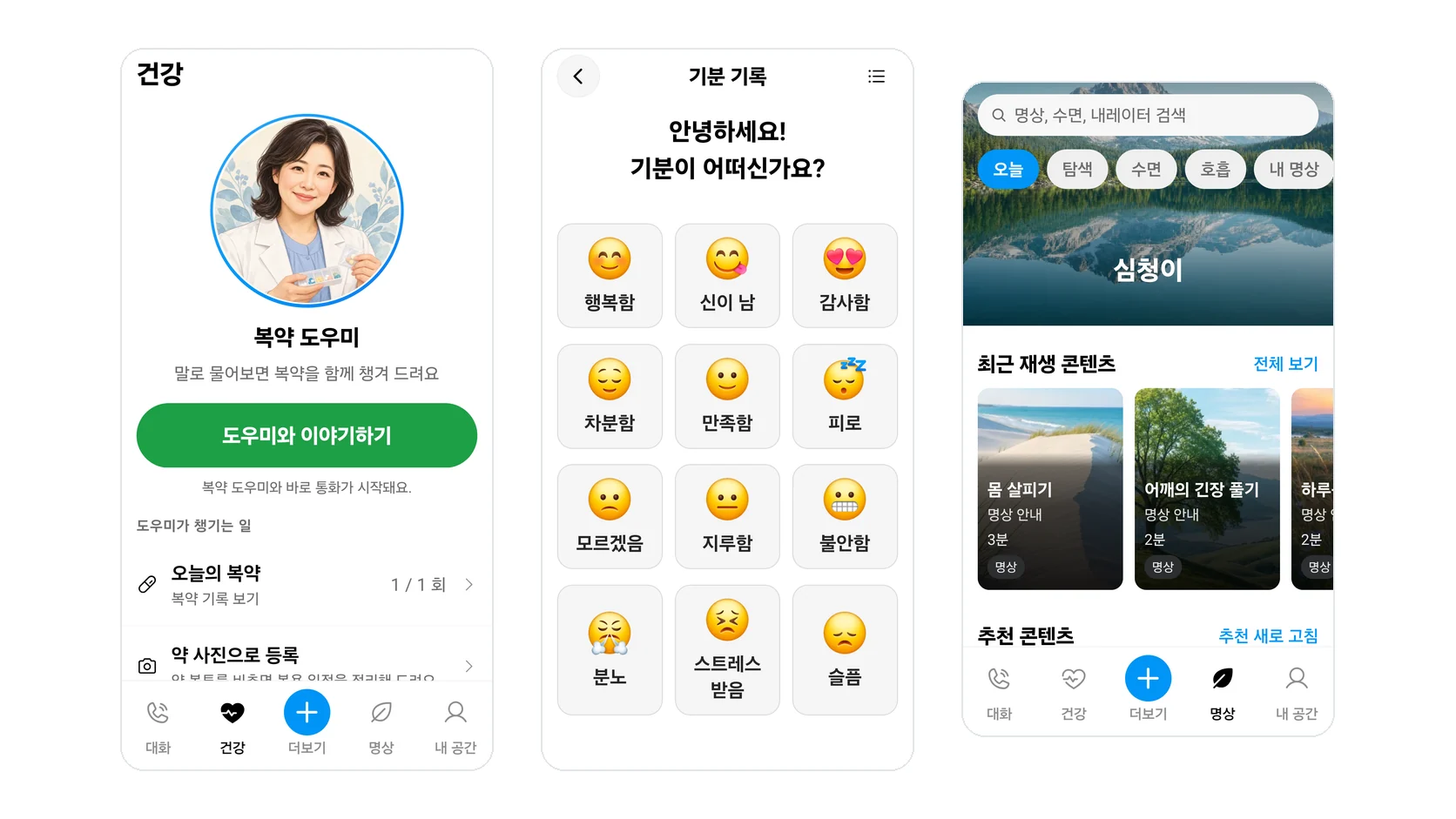
Simcheong product code includes a local meditation player with presets, language-aware spoken captions, and a start/stop control.1 Repository code also contains guidance that identifies the guide as AI, keeps the practice non-clinical and interruptible, and directs discomfort back to normal breathing and real-world support.2 These are statements about what is present in shipped code. They are not claims of current availability, universal access, or measured results.
Limits that should remain visible
No voice AI can determine whether meditation is appropriate for you, diagnose distress, or understand your full context. It cannot know why a practice feels uncomfortable. It should not present itself as a clinician, meditation teacher, caregiver, friend, or substitute for any of them.
It also cannot turn general research into a personal prediction. A calm-sounding voice does not make an instruction safe for everyone. A feature implemented in code does not show that people can access it now. A completed session does not prove that anything improved.
If meditation repeatedly brings up distress or feels difficult to manage, stop using the guide and consider speaking with a qualified professional or a trusted person in your real-world support network. If you already receive care, a voice practice should not replace it.
The same boundary applies to ordinary preference. You may dislike guided meditation. You may prefer music, walking, prayer, conversation, quiet, or no deliberate pause at all. Voice AI should expand options, not narrow them.
A small pause is enough
The most useful way to approach a short meditation is as an invitation with a clear exit.
Choose a brief length. Keep breathing natural. Give attention one simple place to rest. Adjust the voice until it is easy to understand, or switch it off. Stop when you want to stop.
Evidence can help us define the boundaries: structured mindfulness programs deserve to be described as structured programs; voice feasibility deserves to be described as feasibility; product code deserves to be described as code. Within those boundaries, a spoken guide can still do something practical. It can help mark the beginning, leave a little space, and mark the end.
That is enough for a small pause.
Footnotes
This note describes the implementation as it stood when it was written. Figures are counted from the repository; they are not published benchmarks or a performance guarantee. What changed afterwards is in the changelog.