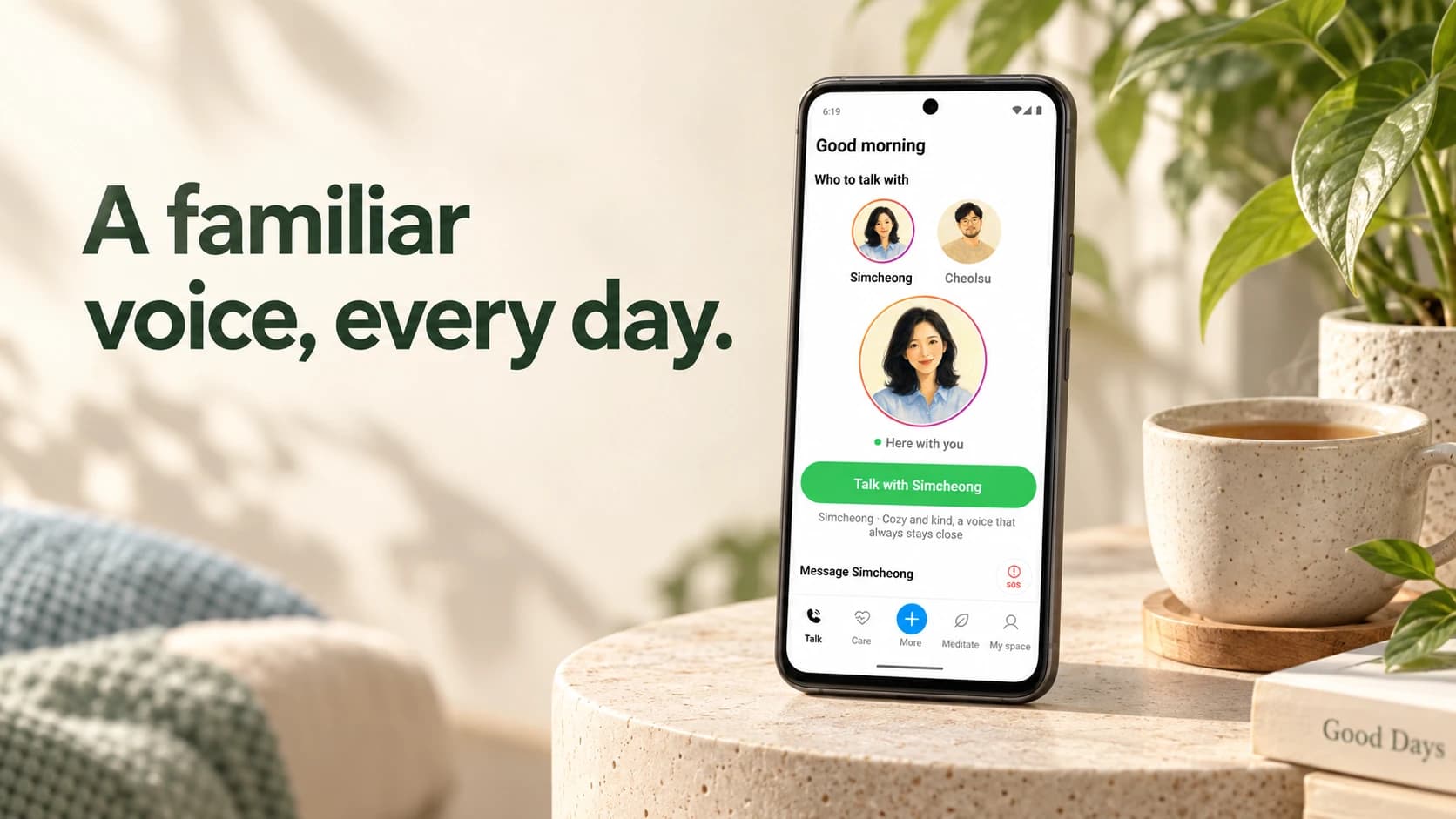
Why IntuneLabs Builds Around Communication Habits
A company note on designing voice AI around small, voluntary practices while keeping choice, silence, and human relationships primary.
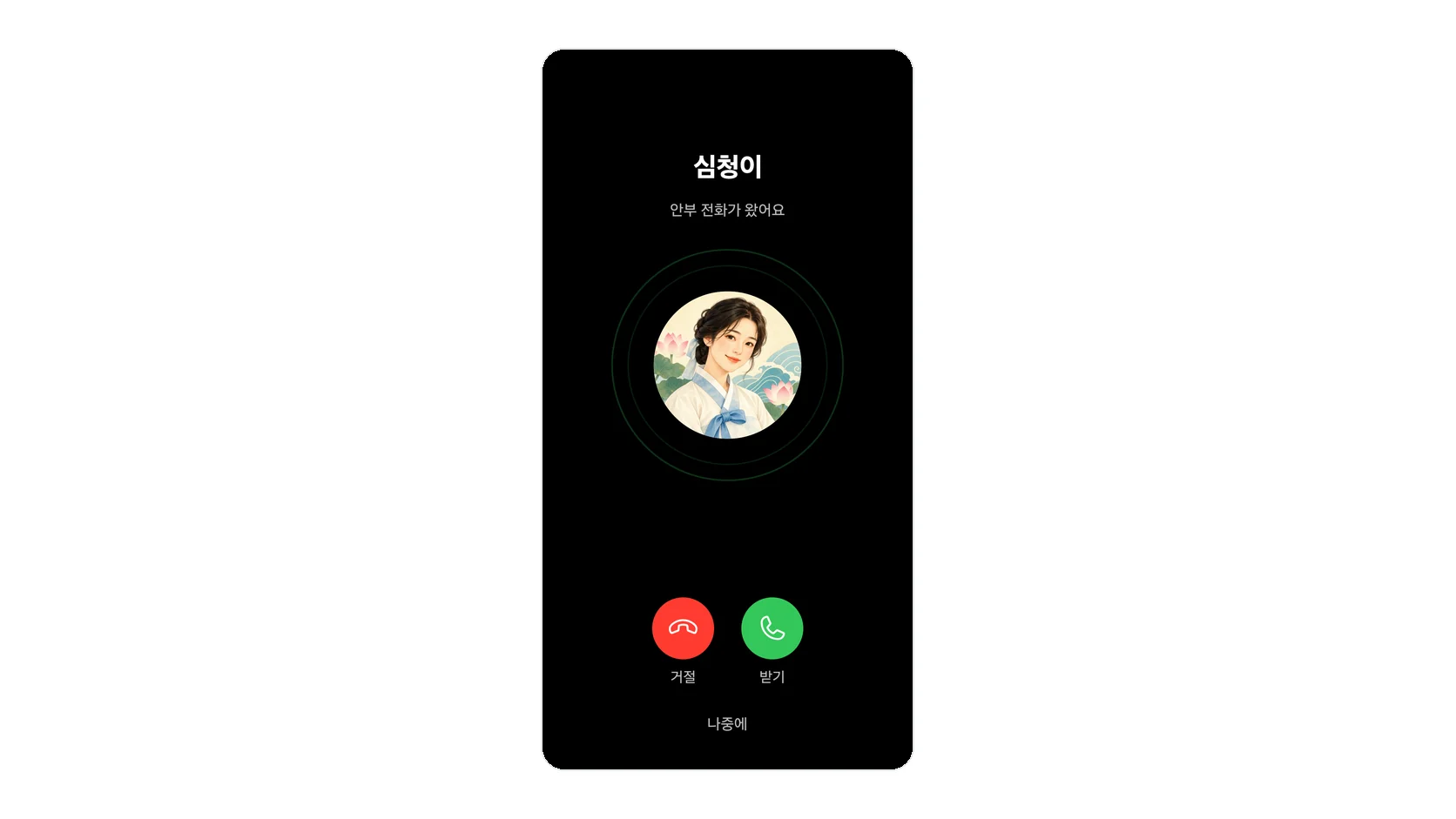
A voice-AI demo has an easy job. In thirty seconds, it can show a clean question, a quick response, and a pleasant voice. The exchange begins at exactly the right moment. No one is tired. No one changes their mind halfway through.
An ordinary Tuesday is the real design test.
On Tuesday, attention is divided. The reason to speak may be small. A person may stop after one sentence, ignore a prompt, or decide that a call to someone they know would be more useful than another exchange with software. The product has to be worthwhile in those conditions, not only when someone is watching a demonstration.
That tension gives IntuneLabs a specific product standard: usefulness without engagement pressure.
Our repository documents integrated voice-AI product surfaces. That is evidence of product-layer work, but it is not evidence of universal live availability or improved wellbeing.1 The standard in this note is a first-party editorial position, not a report of measured results or established company history. IntuneLabs chooses to focus on repeated, voluntary communication habits while keeping people and care networks primary.2
“Habit” can sound suspicious in a product memo. It often sits close to retention, streaks, notifications, and the assumption that more use means more value. We are using the word in a narrower way. A communication habit is a familiar path that lowers the effort required to express an intention. It remains useful only while the person can refuse it, leave it, or direct it toward someone else.
That definition changes the questions we should ask while building.
Test one: is it useful without a streak?
A streak is easy to explain in a demo. The number rises, the screen rewards continuity, and the product has a visible story about progress. It also changes the meaning of a missed day. What began as an optional practice can become an obligation the product keeps score on.
For IntuneLabs, the harder standard is whether a communication feature still makes sense after the streak is removed.
Suppose a person uses a voice interaction once, returns after several days, and then leaves again. Did the product provide a clear, low-effort path each time? If so, frequency alone tells us very little about its usefulness. The habit may be familiarity with the path, not loyalty to the product.
This matters because communication is not exercise completed for a score. A person may have spoken with family, spent time in a community, preferred quiet, or simply had no reason to use the system. The product cannot know which explanation applies, and it should not turn absence into a judgment.
The design test is therefore simple to state and difficult to satisfy: remove the reward for returning. Remove the penalty for not returning. Then ask whether the interaction itself still earns its place.
That can produce a less exciting product dashboard. It may also make a demo feel incomplete because there is no rising count to point at. We accept that tradeoff. A communication tool should have to prove its usefulness each time instead of borrowing meaning from accumulated engagement.
Test two: can silence or refusal count as success?
Voice interfaces are built to respond. A pause can look like a technical problem, and a declined prompt can look like a failed conversion. That framing encourages the system to fill silence, repeat itself, or make the invitation harder to ignore.
Our standard points in the other direction. If a person says no, stops speaking, or ends the exchange, the product should be able to complete the interaction cleanly. That outcome belongs in the definition of a successful session.
This is more than an exit button. Refusal has to work at the moment when the system asks for attention. The language should be understandable. The consequence should be proportionate. A person should not have to explain the decision, protect a score, or reassure the software.
Silence requires even more restraint because it carries no reliable explanation on its own. It might mean thought, rest, distraction, discomfort, completion, or nothing the product needs to interpret. Treating silence as a signal of loneliness or decline would convert an ambiguous human moment into a product judgment. Treating it as permission to continue would weaken the person’s control.
This test gives us a different review question. Instead of asking only, “Did the prompt get an answer?” we should ask, “Did the interaction remain respectful when it did not?”
That question can lower completion metrics. A system designed to accept refusal will retain fewer exchanges than one designed to overcome it. For us, that is not automatically a defect. If the product becomes more useful only by making “no” less effective, it has failed the standard.
Test three: does the prompt lead outward or hold attention?
The central risk in habit design is not repetition by itself. It is allowing the product to become the destination.
A voice interaction can keep producing another question. It can respond warmly, remember context, and make continuation feel effortless. Those qualities may improve a single exchange. They also create a strong incentive to measure value by how long the exchange lasts.
IntuneLabs needs a different direction for communication habits. A prompt should help a person clarify what they want to say, take a next step, or reach a chosen contact or service when that is what they want. The product should be able to release attention once it has done its job.
This is consistent with the World Health Organization’s guidance on social connection, which recognizes that technology can help people reach chosen contacts or services while human relationships and community support remain primary.WHO: Social connection The useful role for technology is to reduce friction around a person’s intention. The relationship remains with the people and communities involved.
“Lead outward” is not a demand that every interaction end in a call. It is a test of direction. Does the design make human contact available without using guilt? Can the person choose a service, a family member, a friend, a caregiver, or no one? Does the system make that transition cleanly, or does it insert more reasons to stay?
This question keeps the company’s incentives visible. A longer session may look better in a report. A short interaction that helps someone move on may be more faithful to the product’s purpose.
The evidence around AI and loneliness also argues for restraint. A 2026 meta-analysis found preliminary and inconsistent results, with no significant overall effect on loneliness.2026 AI-agent meta-analysis That evidence does not support claims that daily voice-product use prevents loneliness, improves relationships, or produces health benefits. Our product standard cannot depend on those promises.
Test four: would this still be good if usage did not increase?
This is the question we want to bring to a communication-habit feature before celebrating it:
Would this still be good if usage did not increase?
If the answer is yes, the feature has a reason to exist beyond engagement. It may make an intention easier to express. It may give a person a clear choice at the right moment. It may make it simpler to move toward another person or to end the interaction without friction.
If the answer is no, we need to understand what the design is actually rewarding. Perhaps the value depends on a streak, a persistent prompt, or an emotional cue that makes leaving uncomfortable. Perhaps the product benefits from continuation more clearly than the person does. Those are reasons to reconsider the feature, even if the engagement forecast is strong.
The test also prevents us from hiding behind broad language about care or connection. A feature should be able to explain its value in the single interaction in front of us. “People will use it more” is a business result, not an account of how it helps.
This may lead IntuneLabs toward decisions that are harder to demonstrate. A respectful pause has no dramatic animation. An easy refusal ends the exchange before the system can show everything it can do. A prompt that leads outward gives up the chance to hold attention. The product may appear quieter because the standard is quieter.
That is an honest cost. It is also useful discipline.
What the standard changes
This standard puts the burden on a feature proposal rather than on the person using it. At IntuneLabs, we intend to ask the proposal to explain its value in one bounded interaction. It should show what happens when the invitation is declined, where the person’s attention goes after the task is complete, and whether the same value remains when return frequency stays flat.
Those questions may reject features that would perform well by conventional engagement measures. They may also reveal that an attractive interaction has no clear purpose once retention is removed. That is useful information before a product begins asking for a place in someone’s routine.
There is still much we do not know. The available evidence cannot establish that repeated voice-product use improves health, relationships, or loneliness, and voice will not suit every person or every day. The product standard is narrower: make the proposed value concrete, then test whether pressure is doing hidden work.
A thirty-second demo can open the product discussion. It should not close the design review.
Footnotes
This note describes the implementation as it stood when it was written. Figures are counted from the repository; they are not published benchmarks or a performance guarantee. What changed afterwards is in the changelog.