Warmth Without Pretending: Notes on Responsible Voice AI
A founder note on making voice AI considerate and accessible without disguising what it is, overstating what it understands, or weakening human control.
The warmer a voice becomes, the easier it is to trust. That sounds like progress until trust begins to outrun understanding.
A patient cadence can make an instruction easier to follow. It can also make pressure feel polite. A familiar tone can make a product easier to use. It can also blur the line between useful personalization and borrowed identity. The same qualities that make a voice welcoming can make manipulation, disclosure pressure, and dependency more effective.
This is the paradox we work with at IntuneLabs: the warmer and more persuasive a voice becomes, the stricter its boundaries should be.
Our position is that warmth can come from pacing, clarity, accessibility, and considerate interaction without pretending the system is a person.1 That position changes how we evaluate the product layer around a voice. IntuneLabs works on integration, orchestration, tuning, and reliability around third-party model and audio components.2 The components can generate language and sound. Our responsibility is to decide what kind of interaction those capabilities are allowed to create.
Four tensions keep that responsibility concrete.
Pace versus pressure
Voice has timing built into it. A spoken sentence occupies the listener's attention until it ends. A pause can offer room to think, but timing can also steer a decision before a person has had time to consider it.
For us, good pacing begins with comprehension. Is the sentence short enough to follow? Does the voice leave room after a choice? If someone interrupts, does the interaction yield? Those questions are more useful than asking whether the voice sounds relaxed.
The risk appears when pacing is optimized for continuation. A gentle transition can still hurry someone past uncertainty. A reassuring phrase can make refusal feel impolite. Repeating an offer in a softer tone is still repeating the offer.
That is why we treat interruption as a product standard, not a personality detail. The interaction should be designed around the possibility that the person wants to stop, correct, skip, or leave. A warm delivery cannot compensate for an exit that arrives late.
The distinction is subtle in a demonstration and obvious in a real design decision. Consider a pause after the system asks a question. One version of that pause waits for the person's answer. Another fills the silence quickly to keep the exchange moving. Both can sound smooth. Only one respects the unanswered space.
Accessibility belongs here too. Some people need a slower pace, repetition, captions, or another way to respond. Others find a slow, overly expressive voice frustrating. We should not encode one performance of friendliness and call it inclusive. The standard is whether timing adapts without becoming a tactic for holding attention.
Clarity versus personhood
A warm voice can make a system's words easier to receive. It can also make the source of those words easier to forget.
The product temptation is to treat that ambiguity as a sign of quality. If people speak naturally to the system, why interrupt the experience by naming the system or its limits? Our answer is that clarity matters more as the performance becomes convincing.
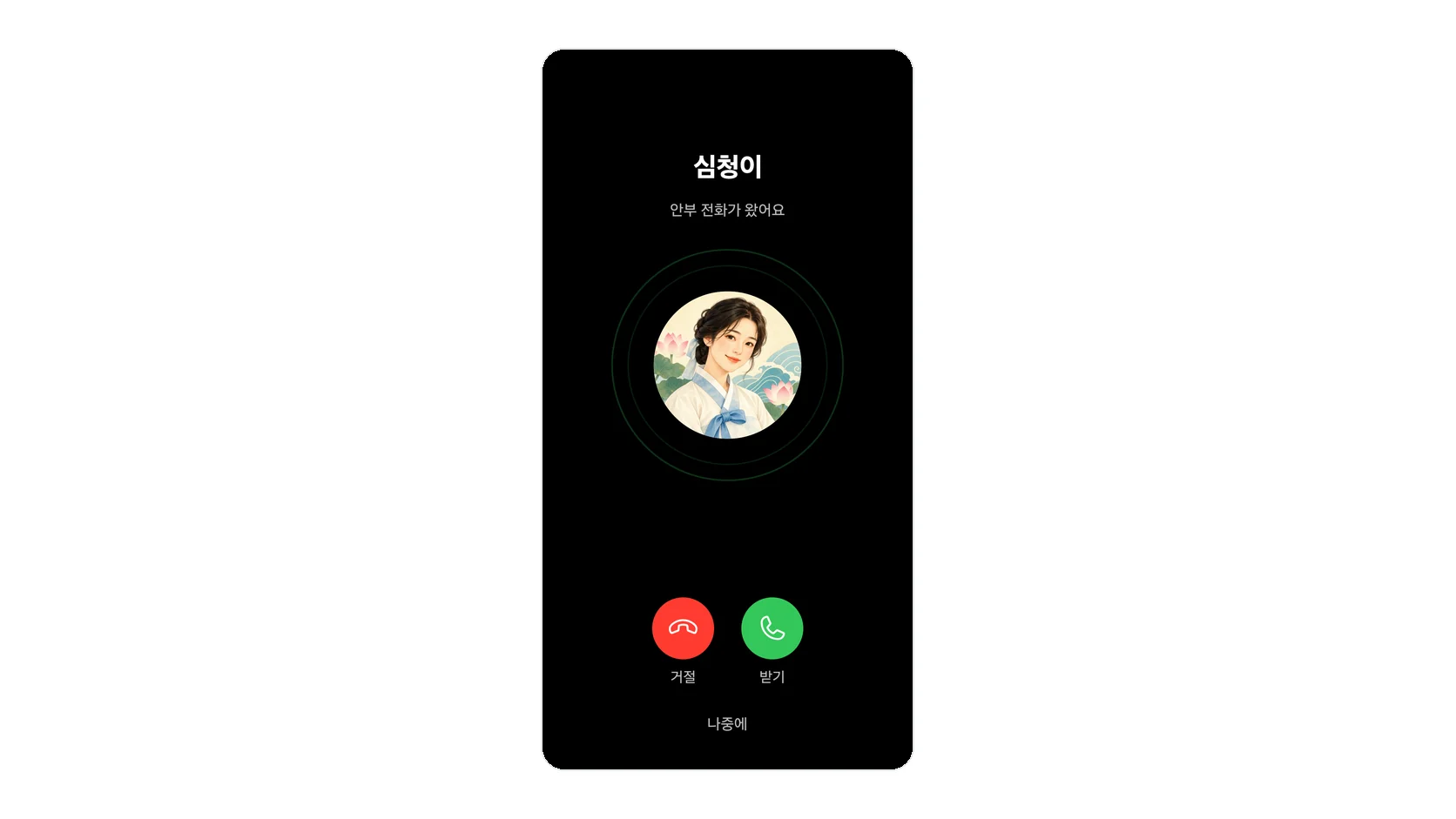
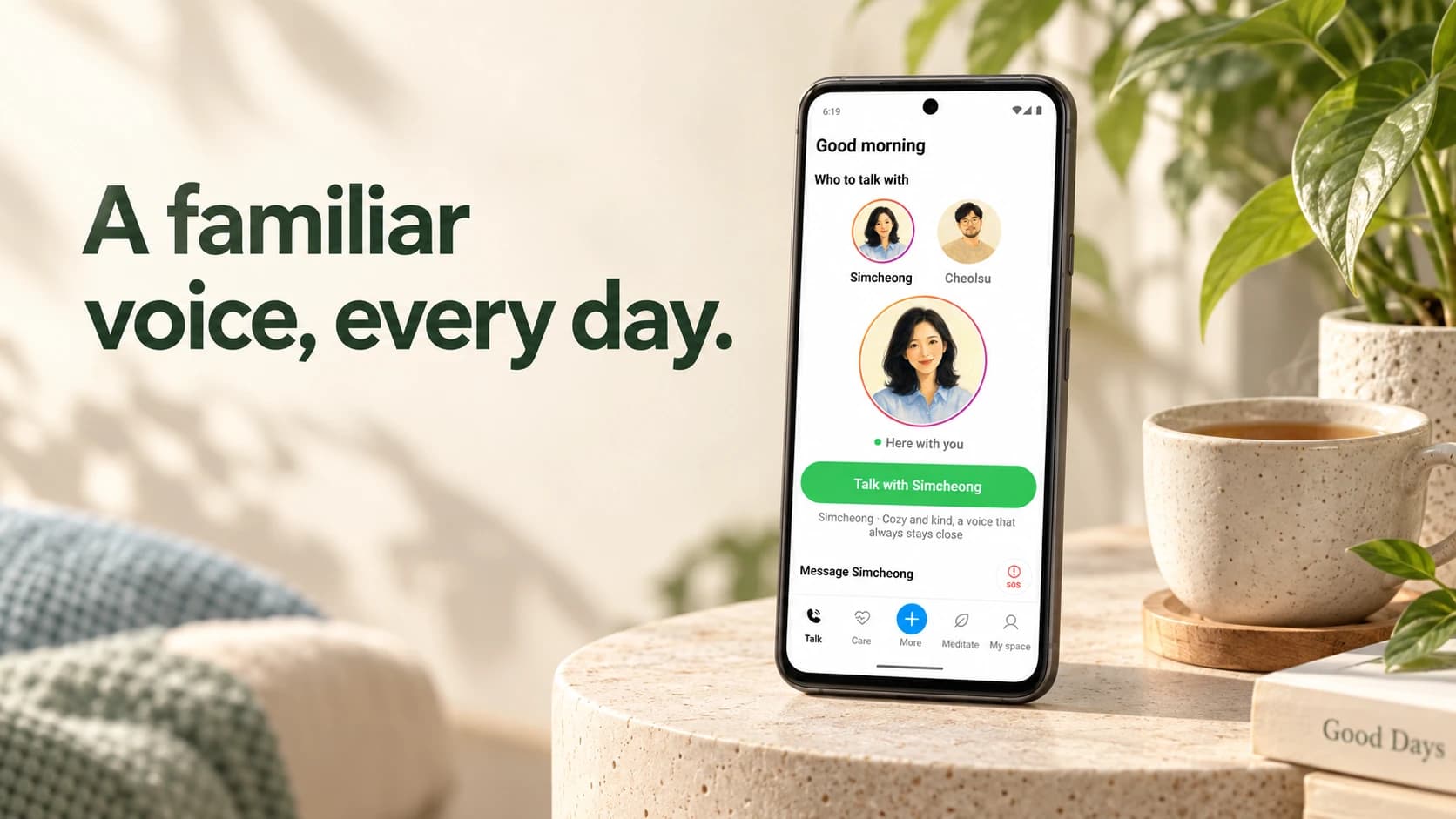
Repository evidence for Simcheong includes shipped-code guidance that identifies the guide as AI, keeps the guided practice non-clinical and interruptible, and directs discomfort back toward normal breathing and real-world support.3 That evidence describes guidance present in code. It does not establish current live availability or prove how every interaction behaves.
The value of the example is the boundary it expresses. AI identity, a limited role, and permission to stop belong inside the interaction. They should not be left to a policy page while the voice itself performs certainty or concern.
Clarity also means resisting emotional shorthand. A system can say that it heard a request or that it can repeat a sentence. It should not imply that fluent language proves emotional understanding. A considerate response does not require a claim about an inner state the system does not have.
This is where the manipulation objection becomes unavoidable. A more expressive voice can make a false claim feel sincere. A calm admission of uncertainty may sound less impressive than a confident answer, but it gives the listener a more accurate basis for deciding what to do. At IntuneLabs, the design test is whether a warmer delivery makes the system's identity and limits clearer, not whether it makes them easier to overlook.
Personalization versus appropriation
Personalization can make spoken interaction more usable. Pace, language, pronunciation, response length, and preferred forms of address all affect whether a person can follow and control an exchange.
But personalization crosses a line when it borrows the authority of a person, relationship, or identity that the system has not earned.
The danger is not limited to an obvious impersonation. It can begin with smaller choices: language that presumes familiarity, a voice that implies a relationship, or a response that turns remembered detail into synthetic intimacy. The product may call that continuity. The person hearing it may reasonably understand it as a claim: this system knows me; this voice speaks for someone; this response carries human concern.
Our standard is narrower. Personalization should serve legibility and agency. It should not be used to manufacture emotional authority.
That standard places limits on tuning. IntuneLabs can tune the orchestration around third-party components—the context, pacing, turn behavior, and reliability of the integrated exchange.2 Tuning does not give us ownership of the underlying foundation models, and it does not turn generated fluency into a human relationship.
It also makes consent and data use specific to the design choice. If a feature depends on personal information, the relevant questions are which information, for what function, and under whose control. Warmth is not permission to collect more context, retain it longer, or use it to deepen a performance of familiarity. We make no universal storage, memory, or deletion promise here.
This distinction changes the evaluation. A personalized pronunciation setting can be judged by whether it improves comprehension. A remembered preference can be judged by whether it removes a repeated task. But a response that uses personal detail to sound emotionally close needs a different question: what gives the system the right to make that performance? Convenience alone is not enough.
Appropriation can also happen without copying a particular person's voice. A system may adopt forms of address, cultural cues, or relational language that suggest membership or familiarity it does not possess. The standard cannot be perfect neutrality; every voice carries choices. The standard is whether those choices help the listener understand and act, or recruit identity as a shortcut to trust.
The World Health Organization's guidance on AI in health emphasizes human autonomy, safety, transparency, accountability, and inclusion.WHO guidance on AI for health We use those principles as context for our design questions. They are not a certification, endorsement, or claim of universal compliance for IntuneLabs or Simcheong.
Continuity versus dependency
A voice product needs some continuity to be useful. Without stable turn-taking, understandable context, and predictable controls, each exchange feels like starting over. Continuity can lower effort.
It can also become a business incentive disguised as a relationship.
The easiest metrics often reward more: longer sessions, more frequent returns, more disclosure, fewer exits. A warmer voice may improve all of them. That does not tell us whether the product served the person or simply became better at keeping the conversation going.
For IntuneLabs, continuity should be tested against dependency. Does remembered context remove needless repetition, or does it create pressure to keep feeding the system personal detail? Does a familiar voice help someone navigate, or make stopping feel like withdrawing from a relationship? Does the product make a handoff easier when a person or service is the appropriate destination, or does it protect its own engagement?
These are standards we intend to use in product decisions, not guarantees about every present or future deployment. The available evidence does not establish that Simcheong prevents dependency or produces better relationship outcomes.
Human connection provides a simple boundary. Technology can help someone reach a chosen contact or service, while relationships and community support remain primary.WHO: Social connection Research on AI agents and loneliness is still preliminary and inconsistent, so it does not justify presenting a voice product as a cure or substitute for people.2026 AI-agent meta-analysis We make no Simcheong-specific loneliness claim.
The product question is therefore not how convincingly a system can occupy the place of an ongoing human relationship. It is whether continuity helps a person act with less friction while leaving the human destination intact.
Stricter boundaries are part of the voice
The four tensions do not resolve into one perfect setting. A slower pace may improve access in one context and feel controlling in another. Personalization may reduce effort while also increasing the risk of appropriation. Continuity may make a task easier today and encourage dependence over time.
That uncertainty is a reason to make the tests more concrete.
At IntuneLabs, we should be able to examine whether a pause gives room or creates pressure. We should be able to hear whether AI identity remains clear after tuning. We should be able to identify the exact function served by personal context. We should be able to see whether continuity supports an action or merely extends an exchange. When the system reaches a limit, stopping and moving toward real-world support should remain legitimate outcomes.
The shipped-code guidance cited above gives one bounded example: identify the guide as AI, keep its role non-clinical, and allow the practice to be interrupted.3 It is not proof that the broader standard has been achieved. It shows the kind of boundary that can be written into the product rather than added later as reassurance.
A voice that sounds warmer carries more persuasive force. We should treat that force as a responsibility to constrain, not a capability to maximize.
Footnotes
This note describes the implementation as it stood when it was written. Figures are counted from the repository; they are not published benchmarks or a performance guarantee. What changed afterwards is in the changelog.