What Personal Voice Can Do—and What It Should Not Pretend to Do
A practical boundary between voice personalization and identity imitation, with questions about consent, provenance, access, privacy, deletion, and human control.
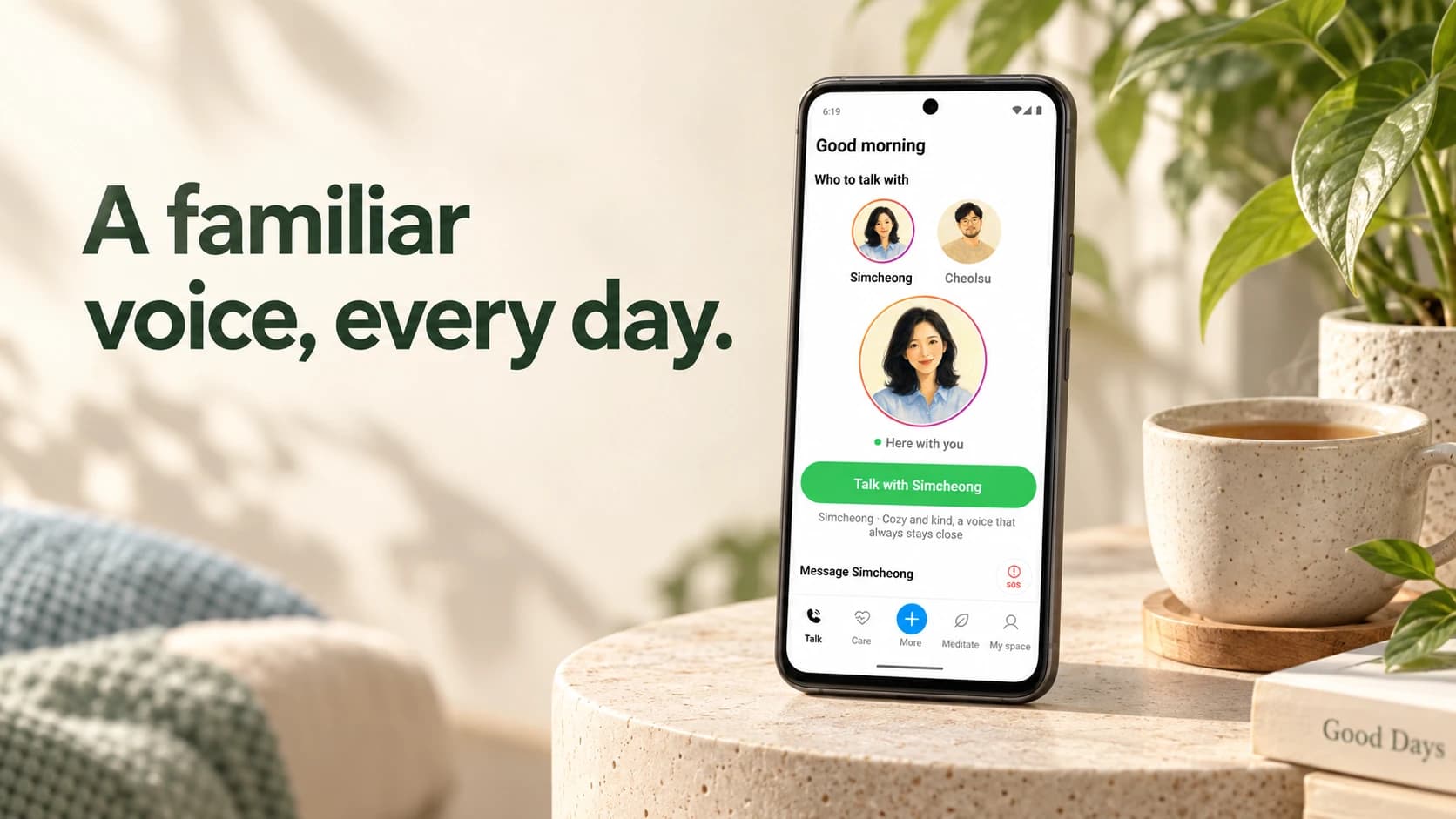
If an AI voice sounds familiar, what exactly has been personalized?
That question is easy to skip. “Personal voice” can sound like a single capability, but it brings together several different issues: how audio is generated, whose voice is represented, what permission exists, who can enable the feature, what data is retained, and whether a listener knows they are hearing AI-generated speech.
The most important distinction is between personalization and identity imitation. Personalization changes characteristics of an AI-generated voice for a defined use. Identity imitation asks the system to sound as though a particular person is speaking. The technical distance between those ideas may sometimes appear small. The ethical distance is not.
The useful boundary is practical: what the Simcheong repository documentation supports, what it cannot prove, and what questions should be answered before anyone treats a personal voice as ready for real use.
Personalization is a setting; identity is a human claim
A voice can be adjusted in many ways without claiming to be a person. It can be easier to hear, slower or faster, more or less expressive, or simply more familiar in tone. Those choices may shape an interaction, but they do not give the system a human identity.
Identity imitation changes the meaning of the output. The listener may reasonably ask: Is this person actually speaking? Did they approve these words? Is the voice being used in the context they agreed to? Could someone with more access or authority use it in a way they did not expect?
That is why resemblance cannot be the only standard. Even a technically impressive voice can be inappropriate if its source is unclear, its use is hidden, or control has moved away from the person represented. A personal voice should not be presented as the human speaker, and AI-generated words should not be attributed to that person.
This boundary also protects the limits of the technology. A generated voice does not understand emotion because it sounds emotional. It does not carry the judgment, memory, intention, or relationships of the person it may resemble. It is generated audio. It should be identified that way.
Responsible voice AI therefore has to keep human control visible alongside consent, privacy, transparency, safety, accountability, and inclusion. These are not decorative principles added after a voice has been built; they shape whether and how it should be used at all. WHO guidance on AI for health
What the Simcheong documentation supports
The repository documentation describes a default-off internal personal-voice experiment. It requires authentication, an admin allowlist, and a recorded consent assertion. Its product status is flagged/in rollout.1
That sentence contains several useful limits.
“Default-off” means the documented experiment is not treated as an ordinary, automatically enabled feature. “Internal” narrows the setting described by the evidence. “Experiment” says that the work should not be mistaken for a finished public capability. And flagged/in rollout means the documentation does not establish general availability.
The recorded consent assertion is also narrower than it may first sound. It shows that the documented feature expects a consent condition to be recorded before use. It does not prove how consent is requested, who speaks directly with the person whose voice is involved, what information they receive, how their decision is verified, or how they later withdraw it. The packet does not establish that Simcheong itself collects direct consent from the represented person.
The same repository section documents some default-off internal features with feature-specific authentication, allowlist, permission, consent, and scope checks. This is also flagged/in rollout evidence.2 These checks matter because access to one part of a product should not silently grant access to a sensitive voice capability. But the evidence supports only the described features and checks. It does not prove that every Simcheong surface, deployment, administrator, or data path has the same controls.
This is the practical reading: the documentation shows a deliberately constrained experiment and a set of expected gates. It does not show a public personal-voice service, a completed consent practice, or universal access protection.
Consent is a process, not a checkbox
Consent for a personal voice should continue after the first “yes.” The person represented needs meaningful choices about context, audience, duration, and the kinds of speech the system may generate. A decision made for one use should not quietly become permission for every future use.
Ongoing consent also needs a way to change. Someone may accept a limited experiment and later decide that the voice feels wrong, the audience is too broad, or the purpose has shifted. A responsible process should make pausing or withdrawing permission understandable and practical. It should not depend on the person remembering an obscure setting or persuading an administrator who holds all the control.
There can be more than one affected person. The person whose voice is represented is central, but listeners also need transparency. They should not have to infer whether speech is live, prerecorded, or generated. A label should be clear enough to matter in the moment, not buried in a policy that few people will see.
Provenance helps answer two separate questions:
- Where did the voice characteristics come from?
- Who or what produced the words being spoken now?
Those answers must not be collapsed. Permission to use voice material is not approval of every generated sentence. Likewise, disclosing that audio is AI-generated does not repair missing permission for the source voice. Consent and disclosure work together, but one cannot substitute for the other.
Permission does not remove the power risk
Unauthorized cloning is only part of the risk. Even consented imitation can create identity and power risks.
A person may technically agree while having little practical ability to refuse. A family member, employer, institution, or administrator may control access to the service. The represented person may not be the person who configures it, hears every output, or decides when it is used. Consent recorded at setup can become less meaningful if the use expands while the person’s control does not.
There is also a risk in the output itself. A familiar voice can give generated words more authority than they deserve. Listeners may treat the speech as a message, judgment, or emotional expression from the represented person even when that person never chose those words.
This objection should not be answered with “but the model had consent.” It should change the design questions. Who can initiate generation? Which contexts are prohibited? How is the AI source disclosed every time it matters? Can the represented person review, pause, or end use? What happens when the person represented and the person operating the feature disagree?
No authentication check can settle those questions by itself. Access controls can restrict who reaches a capability. They cannot decide whether a particular use is respectful, whether the power relationship is fair, or whether a listener will misunderstand the source.
Privacy controls in code—and their boundary
Personal voice raises sensitive-data questions because recordings, voice material, transcripts, settings, and session records can reveal more than a user may expect. Privacy therefore has to be described in concrete system behavior, not as a broad promise.
For Simcheong Runtime V2, the report documents code that blocks persistence when retention is set to zero, rejects missing sessions, applies recording vetoes, and uses immutable snapshots. It also says support for retention days is only partial. This product status is shipped code.3
These are specific controls, and they are worth naming specifically. Persistence blocking is not the same claim as anonymous processing. A recording veto is not a promise that no other form of data exists. An immutable snapshot can preserve the state used for a session without proving what happens across every other system. Partial retention-day support is a limitation, not a deletion guarantee.
The broader Runtime V2 report describes the work as code-complete and gate-green, while explicitly saying it is not production-live without rollout and real-call proof. That status is shipped code.4 In other words, the evidence shows implemented controls in product code. It does not show their behavior in every deployed environment, under real traffic, or across every connected service.
Deletion is the clearest place to hold this line. The available evidence does not support a hard deletion guarantee for personal-voice material or for every related record. Zero-retention persistence blocking may reduce what one documented path stores, but it does not prove deletion across source files, derived voice data, logs, backups, exports, or external systems. Without evidence for those paths, the honest statement is that a complete deletion guarantee is unavailable.
A practical evaluation checklist
Before enabling any personal-voice capability, a reviewer should be able to answer the following questions with evidence. “We care about privacy” is not an answer.
Purpose and identity
- What specific use is the voice for?
- Is the goal personalization, or is the system imitating an identifiable person?
- Could a listener reasonably believe the generated words came from that person?
- How will each relevant listener know the speech is AI-generated?
Consent and provenance
- Who is represented by the voice, and where did the source material come from?
- Did that person agree to this use, audience, and duration?
- Does the record show only a consent assertion, or does it connect to a real consent process?
- Can permission be narrowed, paused, or withdrawn without friction?
- Does a new purpose require a new decision?
Authentication and access
- Is this specific capability default-off?
- Who can enable it, generate speech, change its scope, and review its use?
- Are authentication, allowlist, permission, consent, and scope checks enforced for this feature rather than assumed from general account access?
- What happens when an operator’s authority conflicts with the represented person’s choice?
Privacy and deletion
- Which recordings, transcripts, voice assets, settings, and derived data are persisted?
- What does zero retention block, and on which path?
- Can recording be vetoed before capture or persistence?
- Which retention settings are fully implemented, and which remain partial?
- What deletion behavior is actually verified across active storage, logs, backups, exports, and connected providers?
- What cannot currently be guaranteed?
Human control
- Is there an obvious way to stop generation or disable the voice?
- Can the represented person inspect how the voice is being used?
- Are high-impact or ambiguous uses reviewed by a person?
- Is there a clear owner for misuse reports, access errors, and withdrawal requests?
The checklist is intentionally feature-specific. General privacy language and account security do not prove that a sensitive voice pathway has the right controls.
Limitations that should remain visible
The current evidence is repository documentation, not live-behavior proof. It supports a default-off internal experiment at flagged/in rollout and specific Runtime V2 controls at shipped code. It does not establish public availability.
It also does not establish perfect resemblance, direct consent collection from the represented person, complete provenance procedures, universal authentication or access controls, comprehensive retention behavior, or hard deletion. It provides no basis for saying the system understands emotion or becomes the person whose voice characteristics may be represented.
Those are not small footnotes to place below a demo. They determine what can be claimed in the first place.
Personal voice can be evaluated as a bounded product capability: generated audio with a stated purpose, known provenance, continuing permission, restricted access, visible AI disclosure, concrete privacy behavior, and an effective stop. When any of those elements is missing, the voice should not borrow confidence from familiarity. It should remain off, limited, or clearly experimental until the missing control can be shown.
Footnotes
-
IntuneLabs repository documentation, revision 7b658e17…,
services/bot/FEATURES.md:286-287. ↩ -
IntuneLabs repository documentation, revision 7b658e17…,
services/bot/FEATURES.md:285-288. ↩ -
IntuneLabs repository documentation, revision 7b658e17…,
apps/welvoice/web/.task-reports/2026/07/TR-0011-runtime-v2-live-settings.md:39-64. ↩ -
IntuneLabs repository documentation, revision 7b658e17…,
apps/welvoice/web/.task-reports/2026/07/TR-0011-runtime-v2-live-settings.md:1-20,155-167. ↩
This note describes the implementation as it stood when it was written. Figures are counted from the repository; they are not published benchmarks or a performance guarantee. What changed afterwards is in the changelog.